
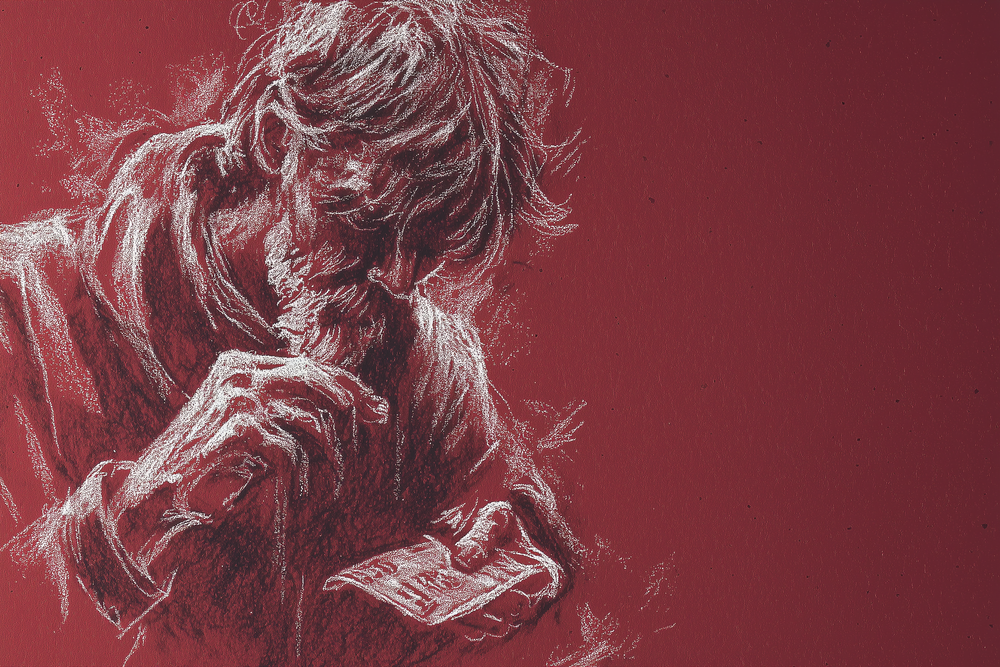
Seven Seven Seven
A quarter still counted. Ray Pulaski fished this one off the sidewalk outside the 7-Eleven on Montrose and set it on the counter next to a dime and three pennies he'd carried in his left shoe since Tuesday.
"Scratcher."
The clerk, a kid with a name tag that read DEV, slid one across without touching Ray's fingers. Ray scratched with the edge of the quarter right there at the counter, because where else. Silver dust caught in the creases of his knuckles. The numbers came up in sequence: 7, 7, 7, and then the prize amount, one digit at a time.
$500,000.
Ray put the quarter back in his shoe.
He folded the ticket in half, then in half again, slid it into the chest pocket of the flannel he'd pulled from a Goodwill bin on West Third six weeks earlier. The pocket still held its button. He checked the button twice.
"You win something?"
"Nah."
The door chime gave its two-note song on the way out. A cab hit its horn at the crosswalk, a bright flat blat that scattered pigeons off the window ledge above the check-cashing place. Ray stood on the curb and looked at that check-cashing place. Cash-4-Less. Yellow sign, black letters, one bulb dead in the S. A handwritten notice taped inside the glass read: WE CASH LOTTERY TICKETS UP TO $599. VALID ID REQUIRED.
Valid ID required.
Ray's driver's license expired eleven years ago. His social security number sat chained to a garnishment from an emergency room in 2014, the one where they'd set his wrist after a fall outside a bar called The Lamplighter, a bar that no longer existed, a wrist that still ached before rain. His name, the name his mother gave him, lived on a warrant in Cuyahoga County for failure to appear on a possession charge from a life that belonged to a different man who happened to share his fingerprints.
He crossed the street anyway.
The woman behind the bulletproof glass at Cash-4-Less wore acrylic nails, each one a different color, and she typed with the pads of her fingers tilted sideways to keep the nails from clicking. A small television bolted in the corner played a daytime court show with the sound cut. The fluorescent tubes buzzed at a frequency Ray could feel in his back teeth.
"Help you."
"Lottery ticket." Ray unfolded it and slid it through the slot in the glass.
The woman picked it up with her rainbow fingertips. Held it under the light. Her eyes tracked the numbers, then tracked Ray's face, then dropped back to the numbers. She set the ticket down on her side of the glass.
"This a five-hundred-thousand-dollar ticket."
"Yes ma'am."
"We don't cash over five ninety-nine."
"Where do I go."
"Lottery Commission. Downtown on Fourth." She slid the ticket back through the slot. "You need a valid photo ID and a social. They run a background check. Takes about two weeks for the big ones."
Ray picked up the ticket. The woman's eyes stayed on him. She took in the flannel, the boots, the hair gone stiff with grease, the particular geography of a face that sleeps on concrete. She'd learned to read people through two inches of polycarbonate, and she read Ray in about four seconds.
"You got ID?"
Ray folded the ticket once and then again. Slid it back into the chest pocket. Checked the button.
"Thank you," he said.
The door carried a real brass bell on a spring, and it rang once behind him, a clean bright ting that chased him out into the diesel and the traffic.
He walked south. Fourteen blocks on Montrose, then left on Cedar, past the taqueria with the hand-painted sign, past the laundromat leaking warm air that smelled like fabric softener and chlorine, past the pawnshop where a row of guitars hung in the window by their necks. His boots hit the sidewalk in a rhythm he could count when the traffic thinned. Tock. Tock. Tock. The left sole worn thinner than the right, because he favored the right leg, because of the knee, because of a different fall in a different year.
The lottery office sat on Fourth between a bail bondsman and a sandwich shop. Glass doors with the state seal etched into them. A security guard inside on a stool, a folded newspaper across his thigh. Office hours in white vinyl letters: MON-FRI 8:30 AM – 4:30 PM.
The light had gone amber. Four o'clock or past it.
Ray stood outside the glass. Through it he could see plastic chairs in a row, a counter with a window, a woman sorting papers. A sign on the wall read: ALL PRIZES OVER $600 REQUIRE VALID PHOTO IDENTIFICATION AND SOCIAL SECURITY VERIFICATION.
The guard looked up. Saw Ray through the glass. Their eyes held. The guard's jaw tightened by a degree. His spine straightened on the stool. The newspaper came down an inch.
Ray pressed his hand flat against the chest pocket.
The ticket crinkled. That tiny cellophane sound, the sound of half a million dollars answering his palm. The guard couldn't hear it. The woman behind the counter couldn't hear it. The people on the sidewalk with their grocery bags and their photo IDs riding clean and laminated in their wallets couldn't hear it.
The guard stood up.
Ray turned south on Fourth. His boots measured the pavement. Tock. Tock. Tock. A bus ground through its gears at the intersection. Two blocks fell behind him, then three. He walked to the underpass on Cedar where his sleeping bag lay rolled inside two garbage bags.
Carl sat on a milk crate next to the concrete pillar, holding a Styrofoam cup of coffee from the Methodist church van. Carl's beard carried food in it. Carl's beard always carried food in it.
"You eat?"
"Not yet."
Ray sat with his back against the pillar. The concrete held last night's cold. He could feel it through the flannel, through the T-shirt, through the skin, settling into the bone along his spine.
Carl drank his coffee. A pigeon landed three feet from Ray's boot and pecked at a smear of ketchup on the concrete. Cars crossed the overpass, each one sending a vibration through the pillar and into his skull, a low hum that settled in his molars.
"Carl."
"Yeah."
"You got ID?"
Carl looked at him over the rim of the cup. Gray eyes, bloodshot, the whites gone yellow. Bits of egg clung to his beard.
"What for."
Ray watched the pigeon. The pigeon worked at the ketchup. A siren climbed its scale somewhere east, held the high note, dropped away.
"Nothing."
Carl went back to his coffee. Ray leaned his head against the pillar and closed his eyes.
Dead Men and Other Stories
This short story is part of my compilation of short stories, Dead Men Talk and Other Stories.