The Luckiest Man
The newspaper ran his picture three times that year. Each time the photographer caught him from the same angle, the lottery check held up to his chest, the casino ceiling behind him hung with chandeliers the size of small cars. People stopped him in the street to touch his coat. They believed it transferred. A woman pressed a rosary into his palm at the deli counter and asked him to hold it for a second, just a second, while her son lay in a bed across town with tubes in both arms.
His name was Tomás Vela and he had not lost a thing he wanted to keep in forty years.
The first win came at twenty-two. A scratch ticket bought with the change from a tank of gas, the silver coating peeling under his thumbnail, and then the number, and then the man at the register going white and calling the manager. Forty thousand. He drove home and his wife wept at the kitchen table and the light through the window fell across her hands and he understood, the way you understand the floor is solid, that the world had selected him.
It kept selecting him.
He found money in coat pockets he had owned for years. He missed a flight that went down over the Atlantic and read his own near-miss in the paper with his coffee, the steam rising, the dead listed in a column beside the box scores. He bet on horses whose names he liked and the horses came in. A doctor found a shadow on his lung and a second doctor found nothing and the first apologized for the equipment. His daughter was born with the cord around her neck and the nurse's hands moved and then the baby cried, waah, and the room let go of its held breath all at once, and Tomás stood at the foot of the bed and felt the selection settle over the child like a coat laid across her shoulders.
By forty he had a house on the hill above the harbor, a wife who slept badly, and a daughter who still laughed in the next room.
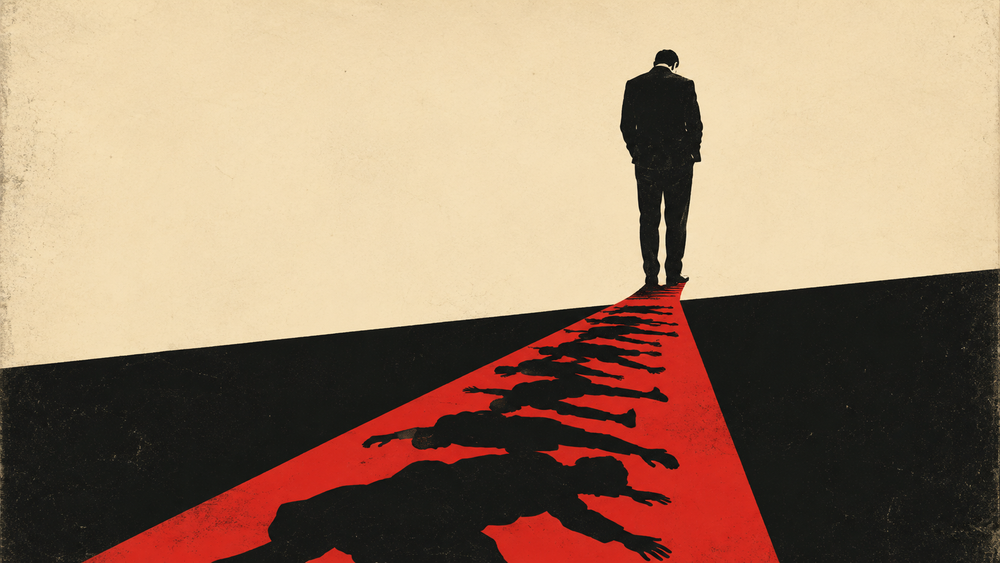
The wife slept badly because of the dreams. She did not tell him the dreams. She told her sister, and the sister told a priest, and the priest came to the house one afternoon when Tomás was at the track and sat in the kitchen with a glass of water he did not drink and listened to her describe the dream where her husband walked through a field of people and every person he passed fell down, quietly, the way wheat goes down, and he never turned to look, and the field went on forever.
The priest said dreams were the soul doing its accounting at night.
The wife said she had started to keep a list. Beside every name she set down what that one had been standing in front of.
There had been a man at his office, a man named Reyes who held the promotion Tomás wanted, who drove home one night and put his car into the bay off the coast road, and the inquest said the brakes, and the brakes had been fine the month before. Tomás got the office the following week. There had been a neighbor who would not sell him the lot beside the house, who took a bad fall on stairs he had climbed for forty years, and the widow sold the lot for less than the neighbor had ever named. There had been a girl his daughter loved at sixteen, a girl with a laugh you could hear from the next room, who said something cruel and small to his daughter at a party and left her crying in a stranger's bathroom. Three days later the girl's mother was knocking on doors with her daughter's photograph. They found her in the spring when the snow went off the mountain.
His daughter stopped laughing in the house after that. She laughed elsewhere. He heard it sometimes through the wall, on the phone, and it stopped when he opened the door.
Tomás did not believe in the field. He believed in the check held up to his chest and the chandeliers and the woman with the rosary. A man does not argue with the floor for holding him up. But he had begun, around then, to keep a careful distance. He stood at the back of every funeral. He let other men go first through doorways. When his wife's sister fell sick that winter he wished her well and meant it, made himself mean it, and visited twice, and the sister recovered, and his wife watched him want his sister-in-law to live and watched her live, and the two facts sat in the house between them like a third person at dinner.
He sold the office. He sold the horses. He told the priest, who had become a kind of friend, that he was trying to want nothing.
The priest said wanting nothing was the hardest want of all.
There is a thing that happens to a man who is never refused. He forgets the shape of his own desire because the world fills it before it finishes forming. Tomás would feel the first edge of a wish, the want of a thing, and the thing would arrive, and so he had lived his whole life in a kind of fog where the wish and its answer occupied the same instant. He could not have told you what he wanted for dinner. The plate was already in front of him. He could not have told you what he hoped for his daughter. She was already grown and gone and would not look at him.
At sixty his wife died in her sleep, which the doctor called a mercy, and which Tomás understood differently. She had wanted, for years, in a low and constant way she never spoke aloud, to be away from him. He had heard it in how she held her breath when he came into a room. He had wanted her to stop being afraid of him. The field heard the wish and answered it the only way it knew, the way it answered everything, by removing what stood in the way. What stood in the way was her fear. What stood in the way was her.
He went to the funeral and stood at the back.
His daughter came. She wore black and her face had her mother's lines now and she stood across the grave from him with the whole open hole between them. After, in the parking lot, the rain starting, tk, tk, tk on the roofs of the cars, she walked toward him for the first time in twenty years, and his chest pulled toward her, and he felt the field gather behind him, patient, enormous, and he did the only thing he had ever found that worked.
He wanted her to leave.
He bent his whole soul to it. He stood in the rain and made himself want, with everything he had, for his daughter to turn around and get in her car and drive away and never come near him again. He wanted it the way a drowning man wants air. He pictured her gone. He pictured her safe in some far city where his luck could not reach, laughing through a wall he would never stand behind.
She stopped a few feet from him. The rain ran down her face, and under the rain her face was wet on its own.
"I forgive you," she said. "For whatever it was. I don't even know what it was. I just don't want to carry it anymore."
And the field, which gave Tomás Vela whatever he most wanted and took away whatever stood between him and the having, and had cleared a rival and a neighbor and a laughing girl and a frightened wife to do it, reached past the wish he was making and found the older one underneath it, the only thing he had ever truly wanted, the thing he had spent twenty years refusing to let himself want, and could not now unwant in time.
She lived. That was the cruelty of it. Nothing stood between Tomás and his daughter. The field had already taken everything that did.
She took his arm. The rain kept on, tk, tk, tk, and they walked together to her car, and she drove him up the hill to the house above the harbor, and she stayed.
She is with him still. He is very old now and she reads to him in the afternoons, and the light comes through the window across both their hands, and every morning he wakes and finds her there and his chest goes tight with a terror he has no name for, watching her pour the coffee, watching her stand too close, the luckiest man in the world, waiting to learn what she is standing in front of.